Once the company that coined the phrase “A diamond is forever,” De Beers is now facing doubts about its own permanence. After dominating the global diamond market for 130 years, De Beers is facing the biggest crisis in its history.
Experts agree that the crisis is not due to a single event, but the result of multiple massive waves hitting the company simultaneously.
1. The Perfect Comeback of Lab-Grown Diamonds
The most fatal blow is technological advancement. Lab-grown diamonds, physically and chemically identical to natural ones, have emerged. Even experts can't distinguish them without special equipment, and their lower prices have quickly disrupted the market.
Since 2020, lab-grown diamond prices have plunged by about 74%, causing natural diamond retail prices to fall by 26%—shaking the value system based on “scarcity.”
2. Failure to Read the Times
De Beers’ long-time slogan no longer resonates with younger generations.
Millennials and Gen Z prioritize unique experiences over material possessions like “eternal love tokens” and are sensitive to environmental and ethical concerns (e.g., blood diamonds).
A sharp drop in diamond demand in China, the world’s second-largest market, due to declining marriage rates and economic slowdown, has also dealt a major blow.
3. Global Recession and Falling Profits
The post-pandemic recession hit De Beers’ bottom line.
Revenue in 2024 dropped 25% YoY to $2.72 billion, with EBITDA turning slightly negative. Unsold inventory reached $2 billion, forcing De Beers to cut its 2025 production forecast by 30%.
Drastic Changes: From Survival Mode to Reinvention
① Exit from Lab-Grown Business
De Beers launched its own lab-grown brand “Lightbox” in 2018 to devalue such diamonds. But this move backfired, accelerating the market.
With prices plunging across the board, De Beers announced plans to exit the business, selling off assets and inventory.
② Focus on Natural and Industrial Diamonds
De Beers now draws a clear line: promote natural diamonds as unique miracles of nature and shift lab-grown diamonds to industrial uses (semiconductors, cutting tools, optics), led by its subsidiary Element Six.
Future Ownership Up in the Air
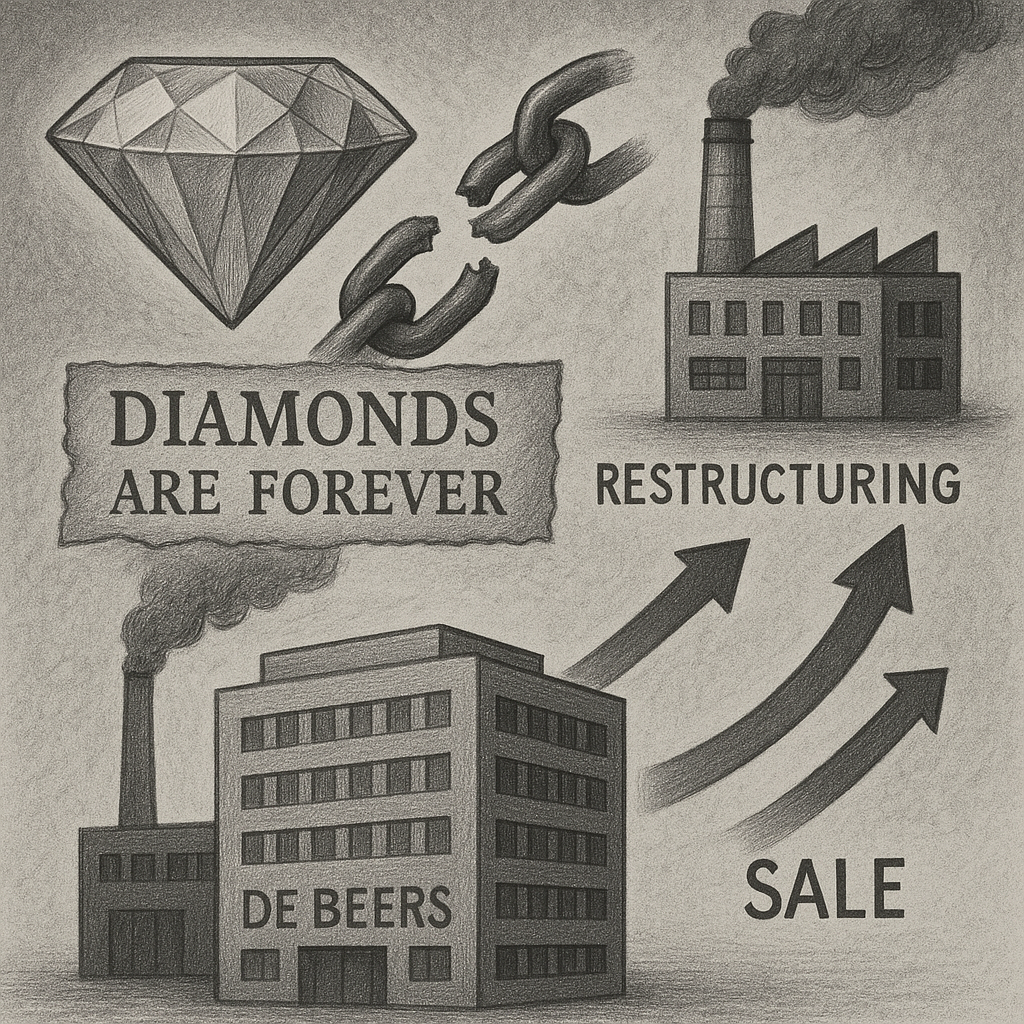
Anglo American, De Beers’ parent company, announced in May 2024 that it would separate or sell De Beers.
Possible routes include a direct sale by end-2025 or IPO by late 2026. The company has cut book value to $4 billion and begun aggressive restructuring.
Potential buyers include former CEOs Gareth Penny and Bruce Cleaver (leading rival consortia), Indian diamond groups (like KGK), Qatar’s sovereign wealth fund, and Botswana’s government (which holds a 15% stake).
De Beers' crisis symbolizes a historic turning point for the entire diamond industry. The world is watching to see if the former giant can find a new owner and a path to revival.
'English' 카테고리의 다른 글
| Which Country Has the Shortest Sex Duration? (1) | 2025.08.07 |
|---|---|
| The Meaning of Tattoo Placement (0) | 2025.08.06 |
| the Grim Reaper of the World (0) | 2025.08.04 |
| The Fastest and Slowest Dog Breeds (0) | 2025.08.03 |
| Hawaiian pizza: the underdog among controversial pizza styles (0) | 2025.08.02 |


